


Advertisements
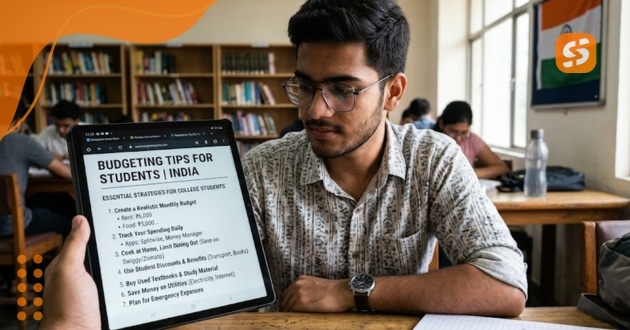
Academic stability and financial survival depend on mastering budgeting tips for students India. Effective resource management is vital in the current landscape, marked by digital transformation and inflation.
The practical application of these budgeting tips for students India is crucial for navigating the volatility of an increasingly digital market. Financial literacy protects the student’s capital against the effects of inflation.
This guide presents various budgeting tips for students India in detail to save in a structured way, achieving monthly savings of up to 20%. The result is a robust action plan to maximize the return of every rupee invested, following the best budgeting tips for students India.
How Much Does It Cost to Study in India’s Major Cities?

Financial planning begins with a clear understanding that geography determines most of a student’s fixed expenses.
Mumbai remains the location with the highest costs due to the real estate market.
Delhi, however, offers a greater diversity of prices, compensated by an efficient public transport infrastructure.
Furthermore, Bangalore and Pune have intermediate costs, requiring differentiated capital allocation strategies to prevent the cost of living from exceeding the available income from scholarships or allowances.
Below, we estimate the costs you will incur in each city:
| Expense Category | Delhi (INR) | Mumbai (INR) | Bangalore (INR) | Pune (INR) |
| Accommodation (PG/Shared) | 10,500 – 15,000 | 15,000 – 35,000 | 12,000 – 25,000 | 8,000 – 15,000 |
| Food (Mess/Groceries) | 5,000 – 8,000 | 6,000 – 10,000 | 5,000 – 9,000 | 4,000 – 6,000 |
| Public Transport/Metro | 2,500 | 2,000 – 4,000 | 1,500 – 4,000 | 1,000 – 2,500 |
| Utilities (Electricity, Water, Internet) | 2,200 | 3,000 – 5,000 | 2,500 – 4,500 | 2,000 – 4,000 |
| Entertainment and Miscellaneous | 2,500 | 4,000 – 6,000 | 3,000 – 5,000 | 2,000 – 4,000 |
| Estimated Total | 22,700 – 33,000 | 30,000 – 60,000 | 25,000 – 47,500 | 17,000 – 31,500 |
Strategies That Make Your Money Go Further

Applying the 50/30/20 rule is one of the most effective budgeting tips for students India to balance current needs with future goals.
According to this structure, 50% of resources should cover needs like accommodation and food, 30% are allocated to personal wants, and 20% must be strictly channeled into savings and investments.
This method protects wealth against the lifestyle inflation that frequently occurs when paid internships begin.
To help you save more and more, below we mention the main financial tips for saving as a university student.
1. Save Thousands with the Right Housing Choice (Budgeting tips for students India)
Housing represents the greatest weight in the student budget, making the choice between hostels and Paying Guests (PG) a critical financial decision.
University hostels are the foundation of economy, with monthly values between ₹2,000 and ₹6,000 that often already include basic meals.
For those who prefer PGs, sharing double or triple rooms in suburban areas reduces the rental cost by 50% compared to commercial centers.
2. Reduce Food Expenses Without Losing Quality
Eating out constitutes the main financial drain in academic life, where a single meal in an average restaurant costs the equivalent of several days of home-cooked food.
Meal preparation or using the hostel dining hall (mess) keeps costs low.
Stocking up on basic items like oatmeal, fruits, and peanuts helps avoid impulse purchases at cafes near educational institutions.
3. Gain Real Advantages with Your Student Card (Budgeting tips for students India)
The student card in India functions as a potent financial lever capable of generating annual savings between ₹10,000 and ₹50,000.
In the technology sector, brands like Apple and Lenovo offer reductions of up to ₹15,000 through the UNiDAYS platform.
In entertainment, streaming services like Spotify and Apple Music provide monthly plans at reduced prices to those who prove academic enrollment.
4. Cut Transport Costs with Smart Options
The intelligent use of public transport in cities like Delhi and Mumbai is essential to keep travel expenses under control.
The use of monthly metro and local train passes drastically reduces the cost per trip compared to taxis or individual transport applications.
Walking or using bicycles for short distances eliminates vulnerability to dynamic fares applied during peak hours.
5. Get Your Tax Money Back Simply (Budgeting tips for students India)
Many students who take up internships ignore that the Tax Deducted at Source (TDS) on their earnings can be claimed back.
Under Section 194J, companies often withhold a percentage of stipends that exceed certain limits.
Furthermore, by filing the Income Tax Return (ITR), students with annual incomes below the exemption limit receive a full refund of these amounts. This increases their annual financial liquidity.
6. Survive Festivals Without Blowing the Budget
The Indian economy experiences high consumption peaks during seasons like Diwali or Holi, where limited-time offers incentivize emotional purchases.
The correct strategy involves planning ahead by creating a specific fund for festivals months before the event.
This allows one to take advantage of real discounts on necessary goods without compromising rent money or resorting to short-term loans.
7. Protect Your Savings Against Digital Fraud
With the increase in online financial fraud, protection against scams is a direct form of saving. Losing savings due to a scam destabilizes a whole year’s academic plan.
It is fundamental to follow security protocols such as never sharing OTP codes, using two-factor authentication, and always verifying the authenticity of suspicious cashback links or job offers.
8. Earn Extra Money with the Best Part-Time Jobs (Budgeting tips for students India)
Increasing revenue is just as important as reducing expenses. The current market offers various avenues for students to earn capital while learning.
Roles vary from online tutoring to junior data analysis, with salaries that significantly help cover the cost of living in expensive cities. Below we estimate how much you can earn in each profession:
| Part-Time Role | Recommended Platforms | Estimated Salary (INR/month) | Required Skills |
| Online Tutor | Vedantu, Chegg, Byju’s | 15,000 – 40,000 | Subject Expertise, Communication |
| Content Writer | Internshala, Upwork | 10,000 – 25,000 | Creative Writing, SEO, Research |
| Campus Ambassador | Internshala, Tech Brands | 5,000 – 15,000 | Networking, Organization |
| Graphic Designer | Behance, Freelancer | 15,000 – 35,000 | Photoshop, Illustrator |
| Junior Data Analyst | LinkedIn, Startups | 20,000 – 50,000 | Python, Excel, SQL |
You can find these jobs on any freelancer website, such as Workana.
Conclusion
Mastering these budgeting tips for students India constitutes the difference between a stressful academic life and a trajectory of success and stability.
The use of zero-balance accounts, digital tracking, and the exploration of government subsidies form the necessary foundation for managing resources in volatile economies.
Financial management should not be seen as a limitation on personal freedom, but rather as the engine that enables conscious future choices.
Every rupee saved today through small adjustments in transportation or food represents a direct investment in your long-term autonomy.
Start applying these strategies today and transform your financial reality. Share this guide with other students seeking stability and start building your emergency fund now to ensure a future without unnecessary debt.
In addition to these tips, it is important to build your credit. In this sense, we recommend that you apply for one of the credit card for low salary to start building your name.