



Advertisements
Are you following the latest updates on South Africa economic crisis news to understand the direction of one of the continent’s most important economies?
The current scenario in South Africa is marked by an intense duality, where industrial recovery attempts to balance the weight of a severe institutional crisis that threatens the presidency.
At this moment, understanding the impact of this South Africa economic crisis news is vital for investors and citizens seeking clarity amidst exchange rate volatility and persistent inflation.
By reading this complete article, you will gain access to a detailed overview that goes beyond superficial headlines, exploring inflation data, the automotive sector, and consumer sentiment on digital platforms.
Ultimately, you will have a deep and objective view of how political decisions and industrial movements are shaping the country’s economic future in this year of polycrisis, ensuring you are well-informed to make strategic decisions about South Africa economic crisis news.
Ramaphosa Against the Wall in the Supreme Court
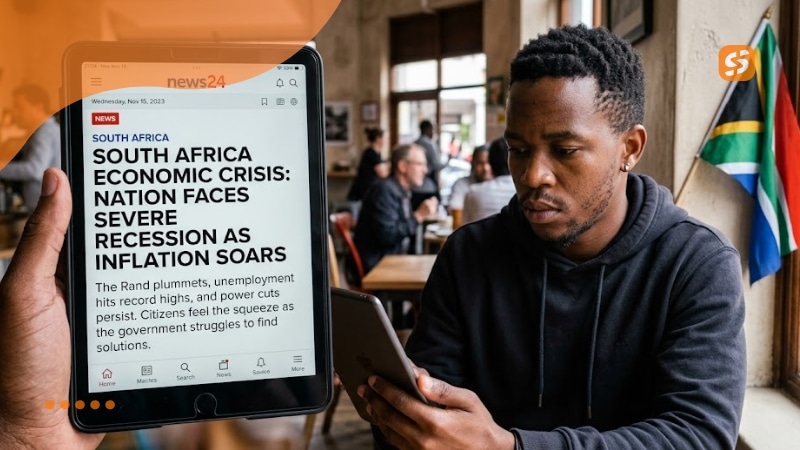
The South Africa economic crisis news takes on dramatic contours with the Supreme Court’s decision. The Constitutional Court invalidated the parliamentary maneuver that protected Cyril Ramaphosa in the Phala Phala scandal. Investigators are now reopening the case of the dollars hidden in a sofa. Pointing to tax crimes and money laundering that could bring down the government.
The risk of impeachment is imminent and destabilizes the governing coalition. The financial market fears the inauguration of Vice President Paul Mashatile, a defender of land expropriation.
This change in command threatens to interrupt reforms and drive away foreign capital essential to the country’s stability.
The Rand plummeted immediately after the news. Political instability threatens the GDP target and raises the country risk.
With the political alliance hanging by a thread, international investors are monitoring Pretoria with distrust. Fearing a collapse in South African governance.
Historic Gasoline Prices and the Squeeze on Wallets
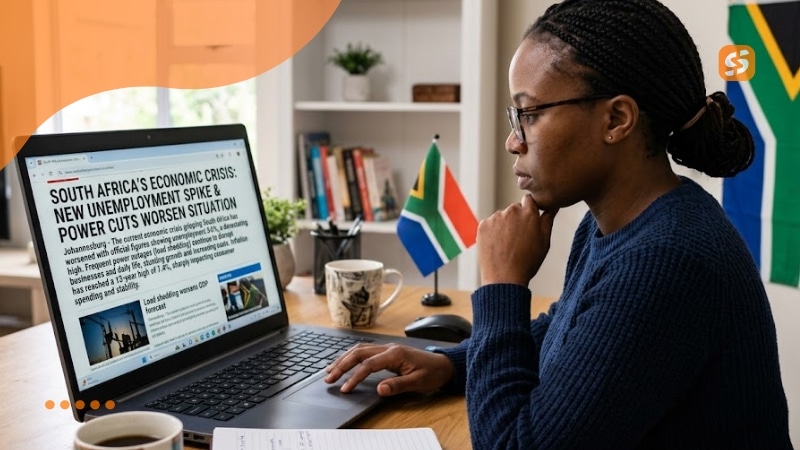
Brent crude oil hit $101, drastically worsening the South Africa economic crisis news.
In South Africa’s interior, fuel hit historical records, raising freight costs and the final price of food. It is a gross economic burden that punishes national logistics and the common citizen’s wallet.
The 3.1% inflation recorded in March is irrelevant in the face of the recent price shock. The central bank, under Lesetja Kganyago, maintains strict vigilance aimed at protecting the 3% target.
Given this, the message is clear. If retailers pass on logistical costs, interest rates will rise immediately, suffocating credit and family consumption.
Critical sectors like education and housing are suffocating the middle class with increases above the national average. The slight seasonal drop in food prices is offset by the expensive electricity bill. Popular discontent is growing, fueling protests that challenge public order and highlight the country’s social fragility at this moment.
The Industrial Resumption Coming from the East
Despite the negative political news, the manufacturing sector shows signs of vigor that feed hopes for recovery in the South Africa economic crisis news.
The announcement by the Chery Group about the acquisition of the former Nissan factory in Rosslyn is a positive milestone for the real economy.
This strategic move aims to transform the plant into an export hub for the African continent. Ensuring the maintenance of 3,000 direct jobs that were at risk after the Japanese brand’s departure from the production unit.
1. Chery Takes Control in Rosslyn (South Africa economic crisis news)
The Chinese giant Chery plans to reach a production of 50,000 units annually by next year.
This investment reinforces South Africa’s position as the main automotive hub on the continent and demonstrates that large international groups still see strategic value in the country, despite the risks.
Chery’s presence also signals a shift in geopolitical dynamics, with China occupying spaces left by traditional automakers that reduced their operations due to high energy costs and logistical instability in local ports.
2. Japan Finances the New Energy Era
The Japanese government is fast-tracking negotiations on a yen-denominated sovereign loan to support South Africa’s energy transition and modernize its power sector.
As a rule, the proposal involves the use of ammonia co-combustion technology in power plants that currently depend exclusively on coal.
South Africa generates 83% of its electricity from coal.
Experts view this technological shift as a viable intermediate solution to cut carbon emissions while maintaining a stable electricity supply for large industries and mining companies.
3. China Opens Doors for South African Agriculture (South Africa economic crisis news)
China is implementing a zero-tariff policy on selected South African products to stimulate trade and mitigate the impact of the ongoing economic crisis.
This facilitates the entry of light manufactured goods and agricultural products into the massive Chinese market. Helping to balance the bilateral trade balance.
This commercial partnership is fundamental to sustaining the growth of the private sector. Which saw the purchasing managers’ index hit 51.6 in April, signaling the largest expansion of business activity since mid-2022.
Surprising Drop in Unemployment
The South Africa economic crisis news records an unexpected data point: unemployment fell to 31.4%, the lowest mark in five years. The advance in civil construction and logistics, driven by industry, sustains the number. However, the data hides the generational crisis, as 57% of young people remain unemployed.
While the formal sector created 320 thousand jobs, the informal sector lost 300 thousand. This shift indicates a severe selection process excluding unqualified workers in the peripheries. The economy of the townships, vital and billion-Rand, remains ignored by statistics. Preventing real solutions for the base of the social pyramid.
The abyss between corporate luxury and survival in the villages generates tension. The expansion of shopping centers contrasts with the invisible inflation of peripheral communities. This gap invalidates monetary policy, as interest rates ignore the real cost of living for the masses living on the margins of the official system.
The Drama of Water and Energy (South Africa economic crisis news)
It is impossible to discuss South Africa economic crisis news without mentioning the state of basic infrastructure. The city of Johannesburg faces a water supply crisis classified as unsustainable by municipal authorities.
Decades of lack of maintenance have made the sanitation system a critical point, affecting residences and heavy industrial activity. Increasing operational costs for companies seeking alternative solutions.
In the electricity sector, the recent stability of the network operated by Eskom is a small miracle, but the reliance on aging coal is an immense risk.
The energy transition is advancing slowly due to regulatory barriers and political resistance to deactivating coal mines that sustain local economies. Without a definitive solution for water and energy supply. Economic recovery will be limited by structural bottlenecks, preventing the country from growing above 3% per year.
The investment of 650 million rands in the new GrandWest Mall shows that private capital is betting on domestic consumption. However, the success of these ventures depends on minimum stability in public water and security services.
The government’s ability to fix basic infrastructure while managing political pressure from Pretoria and the Constitutional Court will determine the future of South Africa’s economic crisis.s
Conclusion
South Africa is experiencing a delicate balance between industrial growth led by new global partners and the imminent collapse of its political leadership under serious accusations.
It is worth noting that economic news shows that the country possesses admirable industrial resilience. But this is constantly tested by external price shocks and institutional governance that fails to deliver the basics.
The choice between stability and drastic change will be made in the coming months. Depending on the outcome of the impeachment process against President Ramaphosa in Parliament.
Investors and consumers must keep a close eye on service inflation and the health of the youth job market. Which continue to be the biggest challenges for social peace and sustainable long-term economic prosperity.
Follow daily updates to understand how each new judicial decision or foreign investment impacts your financial and personal planning.
Be prepared for market volatility, but do not ignore the opportunities arising in sectors such as automotive and specialized retail, which demonstrate strength even in times of deep crisis.
Another interesting point is linked to tourism in the region. We recommend that you now view all the South Africa tourism news 2026.